WHAT PLANTS NEED TO BE CUT BACK IN THE FALL!
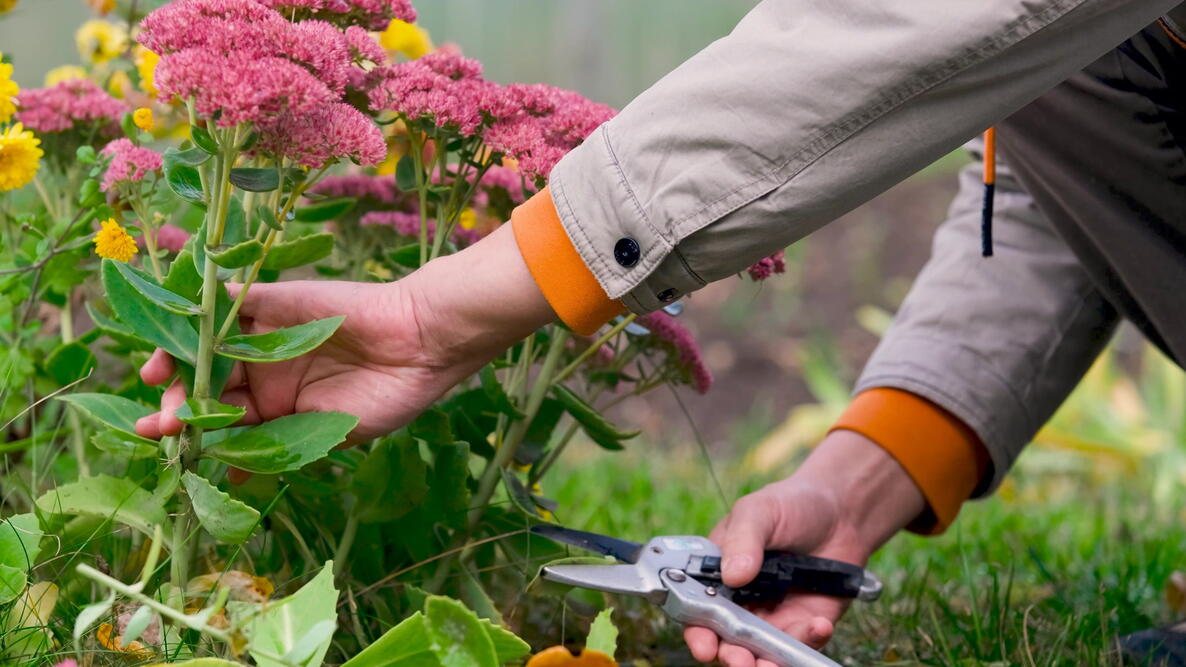
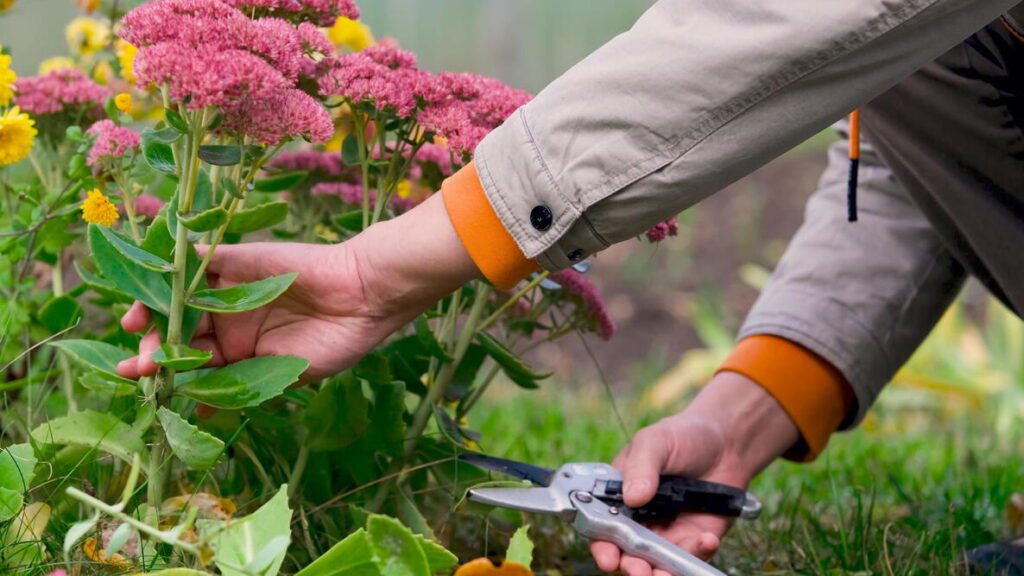
Fall cleanup can be confusing—should you cut back your perennials or leave them standing? The truth is, not all plants benefit from a fall trim. Some need their foliage to survive the winter, while others risk disease if left untouched. In this guide, we’ll share which perennials to cut back, which ones to leave alone, and how to keep your garden healthy and full of life through the colder months.
While our annual flowers are one-hit wonders and turn black after frost, many of us wonder when to cut down different perennial plants. The guidance on “when” and “what” to cut has changed over time.
Perennials NOT to Cut Back
Technically, very few plants MUST be cut down in the fall. And never rush to cut things down; hold off until after several hard frosts. Even if the flowers or leaves are dead, the roots reclaim energy from the dying plant for healthy growth in the spring.
We enjoy leaving as many flower seedheads standing as possible to add winter interest and feed the birds in cold weather. If you follow nature’s lead, the decomposing leaves not only insulate the plant during the winter freezes and thaws but also decompose to provide excellent (and free) fertilizer, saving you time and money in the spring.
Plus, particular perennials should be left alone. This list includes:
- Evergreen perennials such as epimediums, hellebores, heucheras, hardy geraniums, dianthus, moss phlox, and euphorbias
- Candytuft, primulas, hens & chicks, heaths, and heathers (considered evergreen and should not be cut back in the fall). Tidy them in the spring as needed.
Also, do not cut back hardy perennials like garden mums (Chrysanthemum spp.), anise hyssop (Agastache foeniculum), red-hot poker (Kniphofia uvaria), and Montauk daisy (Nipponanthemum nipponicum). Leave the foliage. It’s important to protect the root crowns over winter. Cutting back the plants severely will stimulate late new growth, which will be very susceptible to winter kill.
Pulmonaria and penstemons should also be left in place until spring.
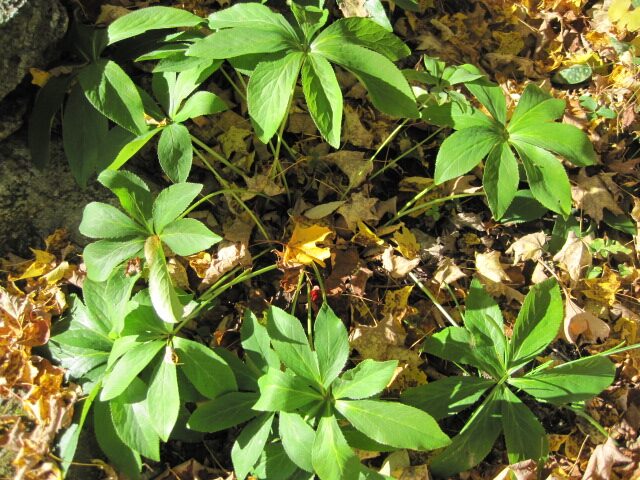
This hellebore is considered an evergreen and should not be cut back in the fall
Always cut back on any infected or diseased plants! Badly damaged or infested foliage should be cut back and removed from infected plants.
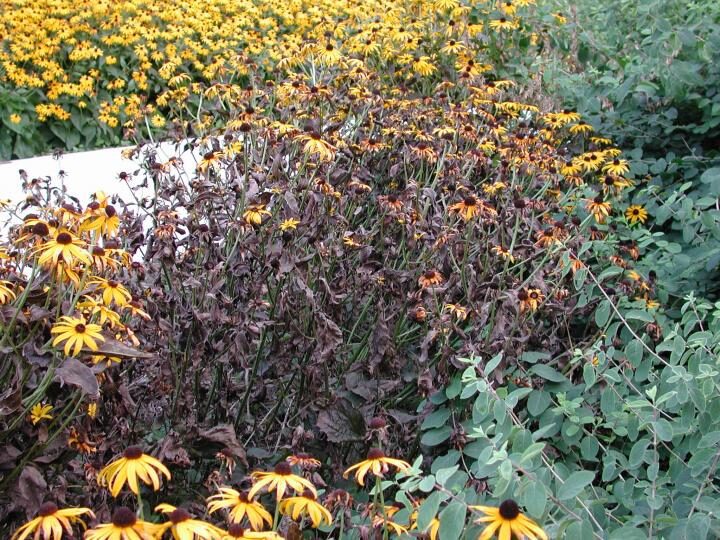
Septoria leaf spot lesions on Rudbeckia leaves. Remove and destroy as soon as possible.
Which Perennials to Cut Back
However, some perennial plants are more susceptible to problems if the old foliage and dying stems are left to rot. Diseases can overwinter in dead foliage, as can slugs and other pests. Old stems can also be battered by fall and winter winds, which can damage the plant’s crown and roots.
Specifically, there is a small handful of perennials that we recommend cutting back in the fall, namely:
- Bee balm and phlox are prone to powdery mildew, so cut them back once the flowers finish.
- Peonies: keep fungal diseases from spreading. Gather a handful of stems and cut them off 2 to 3 inches above the soil.
- Hosta foliage after a hard frost, including any leaves on the ground, as they may harbor slug eggs and prevent new spring growth. Don’t cut the leaves to the ground, though. Instead, leave about 2 to 3 inches of each stem standing to protect the crown during winter.
- Bearded irises need a clean garden bed to stay disease-free. The iris borers’ eggs overwinter on the leaves and stems of the mother plant; by cutting back and destroying the leaves, you can help reduce or even eliminate borers from your garden. Wait until after the first frost because the iris borer moth remains active until then.
If it bothers you to keep the dead and dying perennials standing in your garden bed, see this list of perennials that can be cut down in the autumn. Most plants that flower in early spring or summer can be cut down in the fall.
- Artemisia
Bearded iris - Bee balm
- Campanula
- Catmint
- Clematis
- Columbine
- Coreopsis
- Delphinium
- Daylily
- Hardy geranium
- Peony
- Phlox
- Salvia
- Shasta Daisy
- Sunflower
- Veronica
- Yarrow


Comments